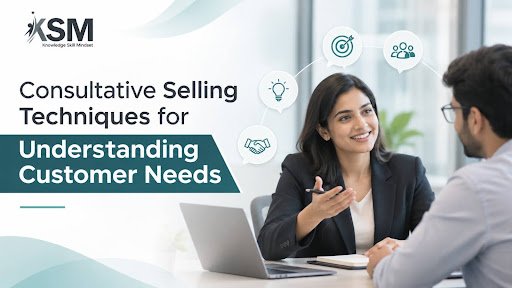
Understanding customer needs is one of the most important skills for achieving consistent sales success. Today’s customers expect more than product information, competitive pricing, or persuasive presentations. They want sales professionals who understand their challenges, listen to their concerns, and recommend solutions that deliver meaningful value.
This is where consultative selling techniques become essential. Instead of focusing on immediate sales, consultative selling encourages professionals to build relationships, identify customer problems, and offer solutions based on genuine requirements.
For businesses operating in competitive markets such as Mumbai and Thane, developing these skills can help sales teams improve customer engagement, handle objections confidently, and build long-term business relationships.
By adopting a customer-focused approach, sales professionals can move from simply selling products to becoming trusted advisors.
What Are Consultative Selling Techniques?
Consultative selling techniques are customer-focused sales methods that help professionals understand customer requirements before recommending products or services.
Unlike traditional selling, which often focuses on product features and closing deals quickly, consultative selling prioritises discovery, active listening, problem-solving, and personalised recommendations.
For example, a customer looking for sales training may initially request a programme to improve closing skills. However, after discussing the team’s challenges, a trainer may discover that the real problem involves poor lead qualification, ineffective questioning, or difficulty communicating value.
Understanding these underlying issues helps identify a more suitable training solution.
The goal is to create meaningful conversations that benefit both the customer and the business.
1. Ask Open-Ended Questions to Identify Customer Needs
One of the most effective consultative selling techniques is asking open-ended questions.
Questions that encourage detailed responses help sales professionals understand the customer’s current situation, business challenges, and expectations.
Instead of asking, “Are you interested in our service?” consider asking:
- What challenges is your business currently facing?
- What improvements are you hoping to achieve?
- How are you managing this process today?
- What concerns do you have about your existing solution?
- What would a successful outcome look like?
These questions encourage customers to explain their requirements in greater detail.
For example, a sales professional working with a corporate client may discover that the organisation needs better customer retention rather than simply more leads.
This information allows the salesperson to recommend a solution that addresses the actual business problem.
2. Practise Active Listening During Sales Conversations
Asking questions is only effective when sales professionals listen carefully to the answers.
Active listening involves paying attention, understanding the customer’s perspective, and responding thoughtfully rather than immediately presenting a sales pitch.
Customers often reveal valuable information through their concerns, priorities, and experiences.
To improve active listening:
- Avoid interrupting customers.
- Take notes during important discussions.
- Ask follow-up questions.
- Clarify unclear requirements.
- Summarise the customer’s concerns before presenting solutions.
For example, if a customer mentions difficulty managing their sales team, explore whether the challenge involves motivation, communication, performance monitoring, or leadership.
This is where skills developed through a professional sales trainer in Thane can support better customer conversations.
Structured sales training programmes can help professionals strengthen listening, questioning, and customer engagement skills.
3. Identify the Root Cause of Customer Problems
Customers may describe symptoms rather than the actual causes of their problems.
For example, a business owner may say that sales performance is declining. However, the underlying issue could involve poor prospect qualification, ineffective follow-ups, weak negotiation skills, or inconsistent sales management.
Consultative selling encourages professionals to investigate these challenges before recommending solutions.
A useful approach is to ask progressively deeper questions.
If a customer says, “Our sales conversions are low,” you might ask:
“What usually happens after your team presents a proposal?”
Their response may reveal that prospects are interested initially but stop communicating after receiving pricing.
Further discussion could show that the sales team is not demonstrating enough value before sharing quotations.
Identifying the root cause helps create a relevant recommendation rather than offering a generic solution.
4. Understand Customer Goals and Decision-Making Priorities
Every customer has different priorities.
Some customers focus on affordability, while others prioritise reliability, long-term support, efficiency, or measurable business outcomes.
Understanding these priorities is essential when developing a suitable sales recommendation.
During customer conversations, explore:
- Immediate business objectives.
- Long-term growth plans.
- Available resources and budget.
- Decision-making responsibilities.
- Expected results and timelines.
For example, a company looking for sales development support may want to increase revenue, improve team productivity, or strengthen customer relationships.
A sales trainer in Mumbai should understand these objectives before recommending a training programme.
This customer-focused process helps ensure that the proposed solution is aligned with business expectations.
5. Use Empathy to Build Customer Trust
Empathy is an important part of consultative selling.
It involves understanding the customer’s situation and recognising the challenges influencing their decisions.
When customers feel understood, they are more comfortable sharing information and discussing potential solutions.
For example, a small business owner may hesitate to invest in professional training because of limited resources.
Instead of immediately defending the programme’s pricing, acknowledge the concern and explore the expected business outcomes.
A useful response might be:
“I understand that managing training costs is important. Could we discuss the specific improvements you want your team to achieve?”
This keeps the conversation focused on the customer’s priorities.
Empathy does not mean agreeing with every request. It means responding professionally while considering the customer’s perspective.
6. Present Personalised Solutions Instead of Generic Sales Pitches
A common sales mistake is delivering the same presentation to every prospect.
Customers have different needs, so recommendations should reflect their individual circumstances.
After identifying the customer’s challenges, explain how your product or service can address those requirements.
For example, rather than simply promoting a sales training programme, explain how it could help improve discovery conversations, objection handling, or customer relationship management.
Connect each recommendation to a specific problem discussed earlier.
Professionals seeking guidance from a sales trainer in Thane can benefit from learning how to develop personalised sales conversations and communicate value effectively.
Personalisation helps customers understand why a particular solution may be suitable for their business.
7. Handle Sales Objections Through Better Understanding
Objections are a natural part of customer conversations.
A customer may express concerns about pricing, implementation, timing, or expected results.
Instead of treating objections as resistance, consultative selling encourages professionals to understand the reason behind each concern.
For example, when a customer says, “Your solution is expensive,” ask:
“Are you comparing the initial investment, or are you concerned about the value it will deliver?”
The answer helps identify whether the issue involves budget limitations, competitor comparisons, or uncertainty about outcomes.
Once the concern is clear, provide relevant information and explore suitable options.
This approach is particularly valuable for sales teams in Mumbai and Thane, where customers may compare multiple providers before making decisions.
8. Connect Sales Performance With Effective Leadership
Consultative selling is not only an individual sales skill. It also depends on how sales teams are coached, managed, and supported.
Sales managers play an important role in encouraging customer-focused behaviour.
When leaders focus only on monthly targets, sales professionals may prioritise closing deals rather than understanding customer requirements.
Effective leadership creates a balance between sales results and customer relationships.
A leadership trainer in Thane can help managers develop communication, coaching, and team development capabilities.
Similarly, businesses working with a leadership trainer in Mumbai can focus on strengthening managerial effectiveness and building more collaborative sales teams.
When sales professionals receive consistent guidance, they are better positioned to apply consultative selling techniques during customer interactions.
9. Follow Up With Relevant Customer Insights
A consultative sales conversation should not end immediately after presenting a solution.
Follow-up communication helps maintain customer engagement and address unanswered questions.
However, effective follow-ups should provide value rather than simply asking whether the customer is ready to purchase.
For example, share a relevant recommendation, clarify an implementation concern, or provide additional information related to the customer’s goals.
A thoughtful follow-up demonstrates that you understand the customer’s requirements.
It also creates opportunities to strengthen trust and maintain professional relationships.
Over time, consistent communication can support customer retention, repeat business, and referrals.
Why Choose KSM Training & Strategy?
KSM Training & Strategy focuses on practical sales training, leadership development, and professional coaching.
Its training approach helps professionals improve customer communication, questioning techniques, objection handling, negotiation skills, and relationship management.
Businesses looking for a sales trainer in Mumbai can explore training solutions designed to strengthen practical sales capabilities.
Organisations seeking a leadership skills trainer in Mumbai can also explore programmes focused on improving leadership communication, team effectiveness, and managerial skills.
By combining practical learning with real-world business scenarios, KSM Training & Strategy helps professionals develop skills they can apply during everyday customer interactions.
Frequently Asked Questions
1. What are the most effective consultative selling techniques?
Effective techniques include asking open-ended questions, active listening, identifying customer challenges, understanding business goals, demonstrating empathy, and presenting personalised solutions.
2. How do consultative selling techniques improve sales performance?
They help sales professionals understand customer needs, recommend relevant solutions, manage objections, and build stronger relationships. These practices can improve sales conversations and support better conversion opportunities.
3. Why is consultative selling important for sales teams in Mumbai and Thane?
Businesses in Mumbai and Thane often serve customers with different expectations, budgets, and requirements. Consultative selling helps sales teams understand these differences and develop customer-focused solutions.
Conclusion
Understanding customer needs is the foundation of successful consultative selling.
By asking meaningful questions, listening actively, identifying underlying challenges, and presenting relevant solutions, sales professionals can build stronger customer relationships and improve sales effectiveness.
Consultative selling techniques also help businesses move beyond transactional sales conversations and focus on long-term customer value.
For organisations in Mumbai and Thane, investing in sales training and leadership development can help teams improve communication, strengthen customer engagement, and develop a more consistent sales approach.
Looking to improve your team’s sales performance? Connect with KSM Training & Strategy to explore practical sales and leadership development programmes.